The Third Place is a concept popularized by American sociologist Ray Oldenburg in the late 1980s1. In simple terms, it’s the idea that as humans we spend most of our time and energy in two places – our homes (first place) and our work or school or university (second place). I know that some people might list work as their first place, but they’re a minority of either very lucky and contented people or very sad and hyper-motivated slaves.
For us normies, meanwhile, the third place is somewhere we can gather and socialize in an informal context. An example that should hopefully resonate with most of you would be our neighbourhoods when we were kids. We would return home (first place) from our school (second place) and head out to our third place where we would either play sports or just hang around and get up to no good with our friends.
The typical characteristics of a third place include that it’s a neutral ground that’s easily accessible, low profile, playful, and comfortable. This has a levelling effect on the interactions that happen at a third place. No one person has a claim over it, many people can access it on their own schedule, there’s no need for pretension, and it creates a relaxed and friendly environment where we feel free enough to be our true selves.
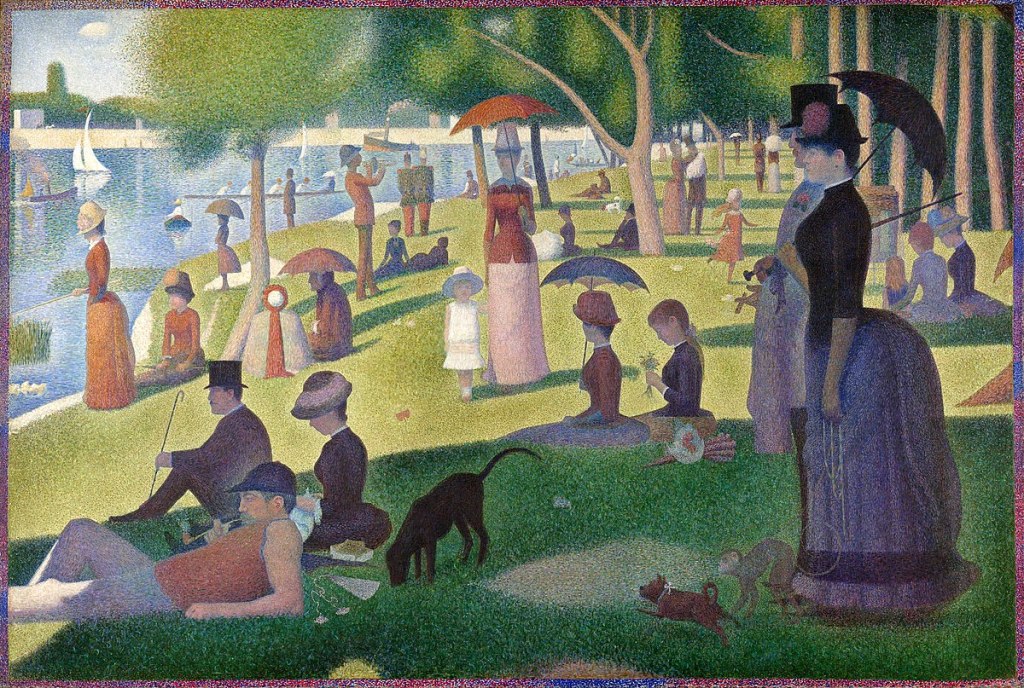
The Rise and Fall of The Universal Third Place
I was an internet optimist in my youth, way back in the halcyon days of Web 2.0 and early social media. The original purpose of social media was that it was a universal third place. Or at least that’s what it felt like. Then a motley crew of corporations, politicians, and previously fringe hate groups discovered that social media could be weaponized to create the late-capitalist fascist hellscape it is today.
Since by then social media (and the internet) had already become our universal third place, we were now bound to it. It was like someone had poisoned the village well and we had no choice but to keep drinking from it. And thus, we too were poisoned. People who tend to be easily manipulated, such as sheltered young people and the elderly, found themselves fully ingesting the poison until it ran through every vein in their body. Others, and I count myself in this group, found themselves feeling constantly sickened by what they had no choice but to consume. Others were inspired to create their own poison and add that to the well too.
So why don’t we just stop? Why can’t we just quit social media or the internet in general? Because Pandora’s Box cannot be closed again. It is still our third place. It is still the most easily accessible, relatively egalitarian, neutral ground where people from around the world can meet, interact, and socialize. And every human being needs a third place. Even the most introverted loner needs somewhere they can go, virtually or IRL, to have some level of social stimulation.

A New Hope: Go Touch Grass
But the last year or so has shown me that while social media cannot be returned back into the fiery chasm from whence it came, it can be relegated to a lower rung of social spaces. I would like to propose that we turn social media from a universal third place into a universal fourth place. But I don’t need to propose it, because that’s what’s already happening.
The simple retort, “Go touch grass” is evidence that our new Gen Z overlords – who I honestly relate to more than my own millennial coevals – are aware that social media is not a substitute for real social interaction.
So, if social media or the internet or television has been your third place throughout the last decade or even your whole life, here is what I do actually propose. Find a new third place. Relegate the world of the internet to fourth and find a real-life place that you can go to and be yourself while interacting with real human beings and not the caricatures we pretend to be on these godforsaken platforms.
The world is out there, not here on whatever screen you’re reading this on.

- To be honest, I don’t know anything about Ray Oldenburg’s life and work beyond my understanding of Third Places. If it turns out that he’s been completely discredited or was a racist abuser or something like that, I’m really sorry, I had no idea. ↩︎
 Harish Alagappa