Tag: India

  • From Third Place to Good Place

    From Third Place to Good Place

    The Third Place is a concept popularized by American sociologist Ray Oldenburg in the late 1980s1. In simple terms, it’s the idea that as humans we spend most of our time and energy in two places – our homes (first place) and our work or school or university (second place). I know that some people might list work as their first place, but they’re a minority of either very lucky and contented people or very sad and hyper-motivated slaves.

    For us normies, meanwhile, the third place is somewhere we can gather and socialize in an informal context. An example that should hopefully resonate with most of you would be our neighbourhoods when we were kids. We would return home (first place) from our school (second place) and head out to our third place where we would either play sports or just hang around and get up to no good with our friends.

    The typical characteristics of a third place include that it’s a neutral ground that’s easily accessible, low profile, playful, and comfortable. This has a levelling effect on the interactions that happen at a third place. No one person has a claim over it, many people can access it on their own schedule, there’s no need for pretension, and it creates a relaxed and friendly environment where we feel free enough to be our true selves.
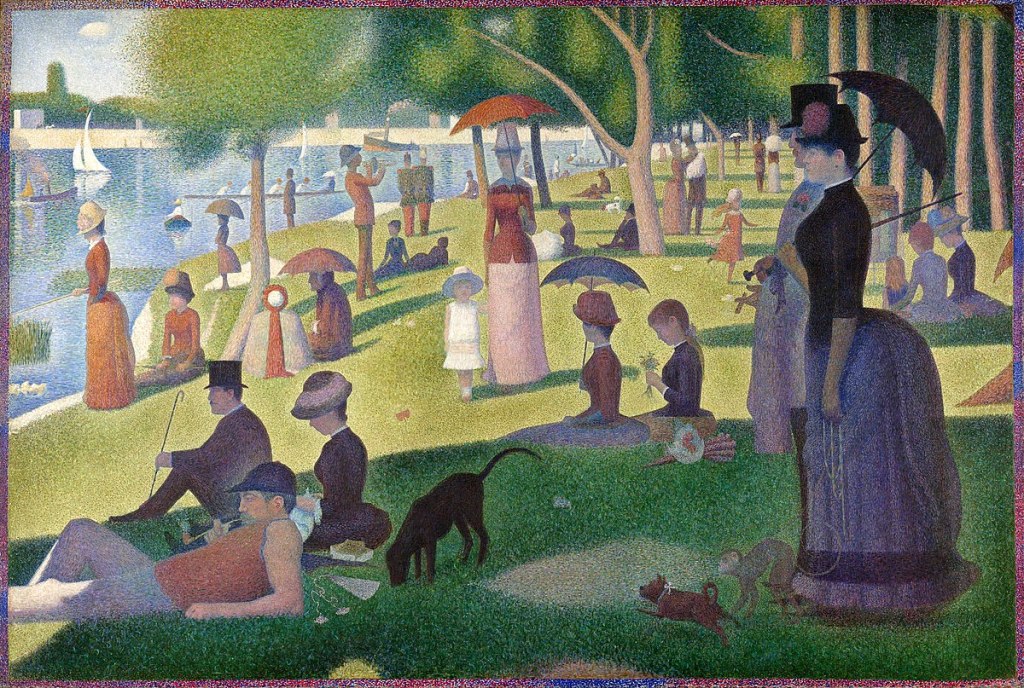
    Of course I'd use Le Grande Jatte. My third place that triggered this whole thought is a quiz club.

    The Rise and Fall of The Universal Third Place

    I was an internet optimist in my youth, way back in the halcyon days of Web 2.0 and early social media. The original purpose of social media was that it was a universal third place. Or at least that’s what it felt like. Then a motley crew of corporations, politicians, and previously fringe hate groups discovered that social media could be weaponized to create the late-capitalist fascist hellscape it is today.

    Since by then social media (and the internet) had already become our universal third place, we were now bound to it. It was like someone had poisoned the village well and we had no choice but to keep drinking from it. And thus, we too were poisoned. People who tend to be easily manipulated, such as sheltered young people and the elderly, found themselves fully ingesting the poison until it ran through every vein in their body. Others, and I count myself in this group, found themselves feeling constantly sickened by what they had no choice but to consume. Others were inspired to create their own poison and add that to the well too.

    So why don’t we just stop? Why can’t we just quit social media or the internet in general? Because Pandora’s Box cannot be closed again. It is still our third place. It is still the most easily accessible, relatively egalitarian, neutral ground where people from around the world can meet, interact, and socialize. And every human being needs a third place. Even the most introverted loner needs somewhere they can go, virtually or IRL, to have some level of social stimulation.

    Not a fan of most 2010s US comedies (like The Office), but The Good Place is an amazing show that's honestly very under-rated

    A New Hope: Go Touch Grass

    But the last year or so has shown me that while social media cannot be returned back into the fiery chasm from whence it came, it can be relegated to a lower rung of social spaces. I would like to propose that we turn social media from a universal third place into a universal fourth place. But I don’t need to propose it, because that’s what’s already happening.

    The simple retort, “Go touch grass” is evidence that our new Gen Z overlords – who I honestly relate to more than my own millennial coevals – are aware that social media is not a substitute for real social interaction.

    So, if social media or the internet or television has been your third place throughout the last decade or even your whole life, here is what I do actually propose. Find a new third place. Relegate the world of the internet to fourth and find a real-life place that you can go to and be yourself while interacting with real human beings and not the caricatures we pretend to be on these godforsaken platforms.

    The world is out there, not here on whatever screen you’re reading this on.

    My trip to Echoes of Earth last year was one of the best of my life. Have some exciting ideas of where to go this year, if things work out.

    1. To be honest, I don’t know anything about Ray Oldenburg’s life and work beyond my understanding of Third Places. If it turns out that he’s been completely discredited or was a racist abuser or something like that, I’m really sorry, I had no idea. ↩︎
  • Zen And The Art of Influencer Marketing

    Zen And The Art of Influencer Marketing

    The world of the 1990s and 2000s seemed to hold immense promise for humanity. The Cold War was over, and technology was bridging barriers, allowing people from opposite ends of the Earth to communicate with one another – offering hope for a more united and compassionate world.

    Well, good news! That promise is all but lost.

    The technology that was meant to unite people from opposite ends of the world has now been turned into a tool to divide people living in the same home. The Cold War was replaced by a Culture War. And perhaps the worst development of all, con artists, grifters, psychopaths, the vapidly vain and the downright inhumane are now heralded as heroes. Meanwhile, social media influencers brag about their material possessions and use that justify their awful behaviour, beliefs, and parasitic existence.

    Fake Plastic Men

    Inhumanity, a complete lack of empathy, naked greed, and bloodlust is supposedly an Alpha/Sigma/Omega/Epsilon mindset. Even though we have stories from thousands of years ago about people searching for the secret to eternal youth and how it made fools of them all, billionaires flaunt their multi-million-dollar anti-ageing procedures, while includes literally taking the blood of young people for themselves.

    The fact that these purveyors of ‘masculine’ influencer content are usually revealed to be frauds, con artists, grifters, literal human traffickers, or children of wealth trying to pass off their nepotism as “self-made” riches does nothing.

    Impressionable idiots are intoxicated by imposter influencers’ inane, immature, and impossible ideals, invariably immersing every iota of their individuality into an intricate, imaginary world of instant gratification and irrational beliefs.

    You have “alpha male” influencers who rail against gender affirming care for trans people on podcasts where they the hawk “nutritional supplement” pills to boost your testosterone. Displaying a staggering lack of self-awareness at best or malicious hypocrisy at worst, these middle-aged uncles take PEDs to maintain their physique, undergo surgeries to look younger and more masculine, and surgically enhance their hairline, jawline, and other body parts to then attack young trans folk for getting gender-affirming surgeries or even taking hormone blockers. THIS is what self-proclaimed alpha men or giga-chads turn out to be:

    We’ve Been Over This Before

    I never thought I would be the one to tell people to hark back to the past, but we’ve been over this before everyone. The ancient Sumerians, Akkadians, Phoenicians, Indians, Greeks, Palestinians, Judeans, Chinese, Japanese and every other culture have age-old stories about the transient nature of material wealth and how hoarding money, or gold or resources makes you pretty a terrible human being.

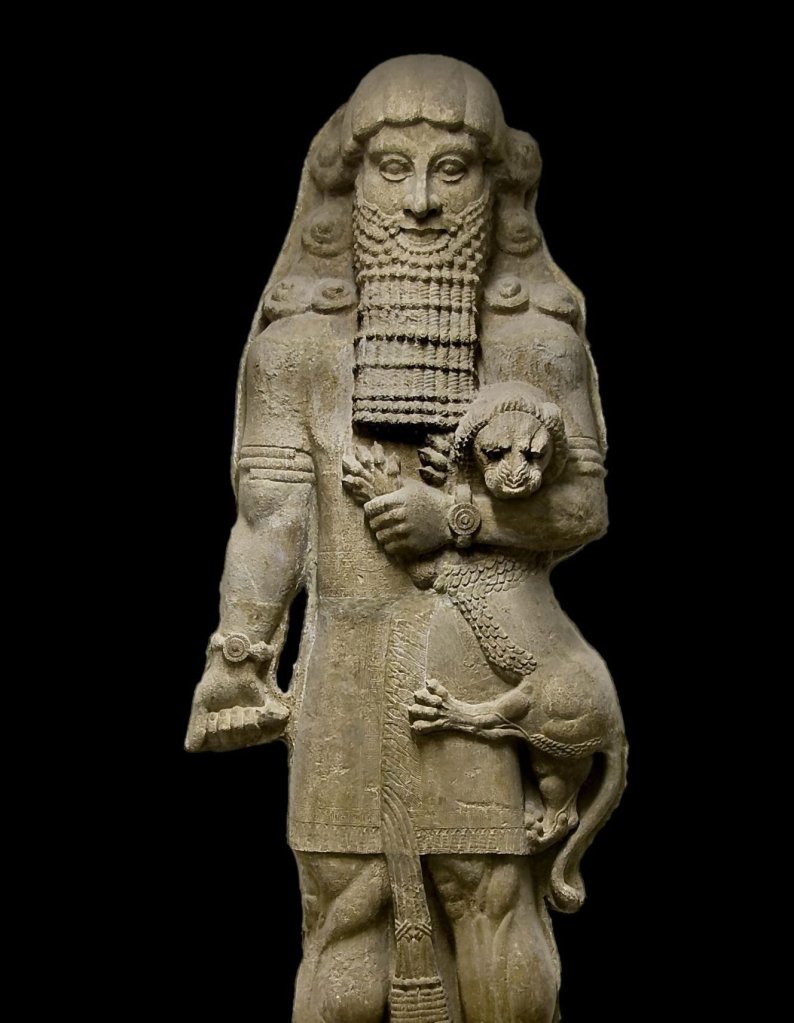
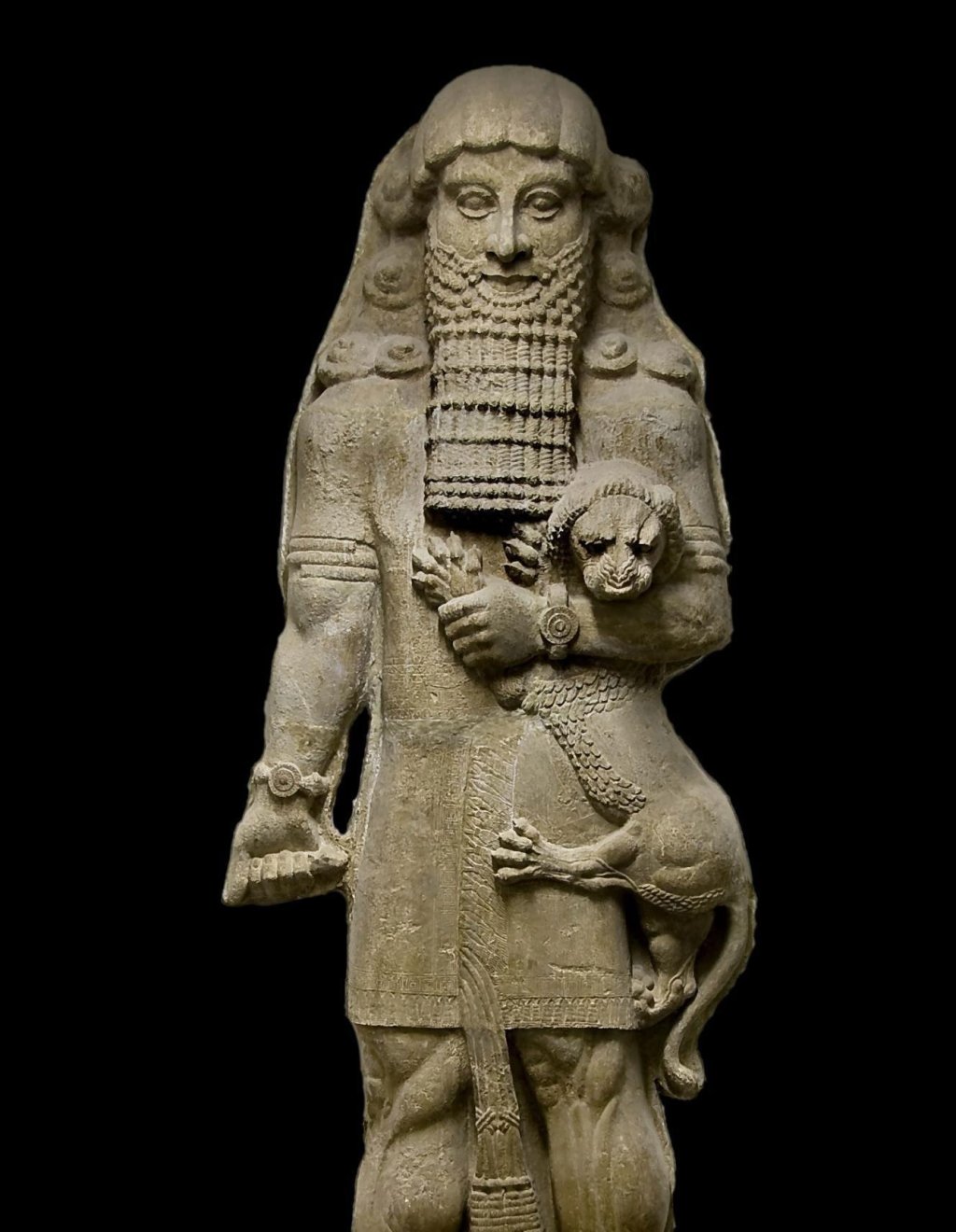
    The Epic of Gilgamesh starts off with the eponymous king abusing his wealth and power in much the same way modern billionaires do, before he is changing his ways and becoming a good guy. Later in the epic, Gilgamesh goes on a quest to become immortal and ultimately learns that it’s impossible, accepting that death comes for us all, even kings.

    Money and looks aren’t everything. Your beautiful bodies will be a stinking rotting corpse one day – there’s no escaping this. Your massive bank account, your lavish mansions and apartments, your Bugatti, none of them will buy you immortality. You may have amassed a cult following among young boys who are extremely familiar with computers but complete idiots when it comes to anything else – but they will die too, and their children will follow a different cult.

    The world was not built by men of iron, who treated everyone around them like dirt and trampled, lied, stole, cheated, raped, and pillaged their way to your idiotic idea of greatness. That’s a version of history created by the people who would simp for these horrible men to feel strong by association. These poor souls existed in the past and exist in the present, simp-ing for men who claim to be the big strong alpha man, but whose bluster hides an obviously and massively fragile ego. Both the leader and the simp are merely sad men trying to live up to impossible standards of masculinity that were thrust upon them without their knowledge. Whose fear of change and an egalitarian world leads them to dive deeper and deeper into justifying horrible behaviour.

    There are eight billion human beings on this planet. None of them is illegal and all of them deserve the same opportunities and resources for life and happiness that around 50,000 people on Earth are all hoarding for themselves while radicalizing impressionable idiots to be their simps – servants, foot-soldiers and grunts who will lick their masters’ boots and die for them even though they get nothing in return in some horrible twenty-first reboot of feudalism.

    It’s just frustrating to see history repeating itself, only worse.

  • A Man Without A Country: Navigating Community and Belonging

    A Man Without A Country: Navigating Community and Belonging

    There’s a question that I dread being asked.

    It’s not “where are the bodies?”, I have my alibi locked and loaded for that one. No, it’s the much more innocuous, “where are you from?”

    If I’m talking to any one of the 6.5 billion people who don’t hail from the nation of my birth, I can usually get away with, “I’m from India”. The problem arises when the question is put to me by a compatriot or someone who knows India well.

    Where my grandma from?

    My father’s ancestors were Tamil-speakers, which is why I have a Tamil surname. But I am not a Tamilian.

    My caste is Brahmin, my sub-caste is Dravida Brahmin, and my sub-sub-caste is Pudur Dravida Brahmin, but I don’t identify with any of those communities, either in belief, spirit or action. For example, Dravida Brahmins are supposed to be strictly vegetarian and let’s just say that I’ve enjoyed a few medium-rare steaks in my time.

    Plus, the obvious caveat that the caste system is a grotesque stain on India’s history and society and one that needs to be eradicated as soon as possible.

    Where am I from?

    I was born in the city of Hyderabad when it was the capital of the state of Andhra Pradesh, but, as of 2014, is now the capital of the state of Telangana. I’m neither Andhra nor Telangana.

    I grew up mostly in Bangalore, or Bengaluru as it’s now called. Its name was (barely) changed to cater to the sentiments of Kannada-speakers, seeing that Bangalore is the capital of the state of Karnataka.

    Changing place names to placate ethnolinguistic or religious pride is common in India, which is why Bombay became Mumbai, Calcutta became Kolkata, Madras became Chennai, and Allahabad became Prayagraj.

    But, coming back to the point, I’m not a Kannada-speaker either and I can’t count myself as a Bangalorean (or Bengalurean?) seeing that I haven’t lived in that city since 2004 when I moved to the national capital territory of Delhi.

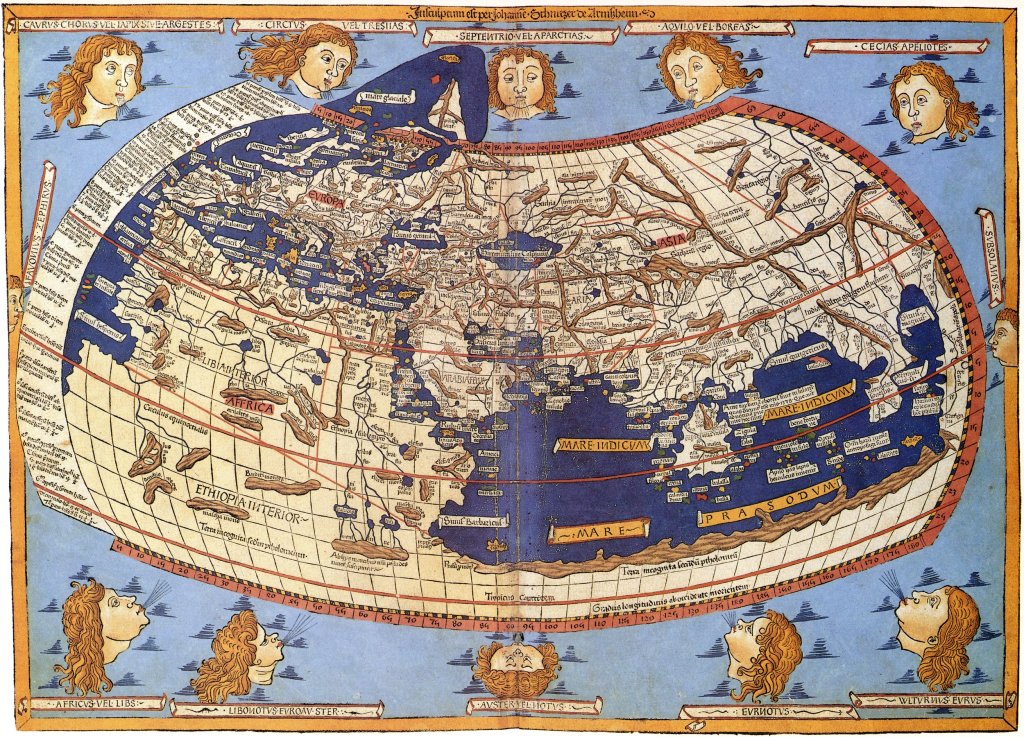
    I lived in Delhi and Noida (in the state of Uttar Pradesh) until around 2017. But it’s not where I’m from. To the people there, I was an outsider. A “Madrasi“, which is what people in North India call anyone who hails from the Southern half of the country, because as far as they are concerned all of South India is just one giant city whose name is no longer what it was.

    I then moved to Goa for a year, which is ironically where I felt the most at home. I since lived in Navi Mumbai, but definitely felt like an outsider there too.

    Now, I’m back in Hyderabad and it is like a foreign country or the past: they do things differently here.

    A man from nowhere and everywhere

    So, to conclude, I am a man with no city to call his own. And according to self-appointed standard-bearers of what constitutes “Indian-ness”, I might not even qualify for that moniker.

    I think the answer is that belonging is not a matter of geography anymore. Community is essential to all humans, but we are the first generation of people who have the freedom to choose what community we wish to belong to.

    Some people find this development strange and unnatural and have been fighting it all the way, which I think is one of the many reasons why neo-fascist and hyper-nationalist movements are gaining ground across the world.

    Nevertheless, I remain, as Kurt Vonnegut said in the title of his final work, A Man Without a Country.

  • また 愛に くる から ね

    また 愛に くる から ね

    A few personal updates.

    I suffered a pulmonary embolism; a bit of the blood clot in my leg travelled up my vein and lodged itself in my lungs.

    I was in the ICU for a few days and at one point, the doctor said I was a “50-50 case”. My folks had to fly back a month early from their first-ever trip to the UK in case the worst happened.

    I went through two rounds of intravenous clot-busters before they wheeled the defibrillator out of the ICU, which until then had loomed over me like the sword of Damocles.

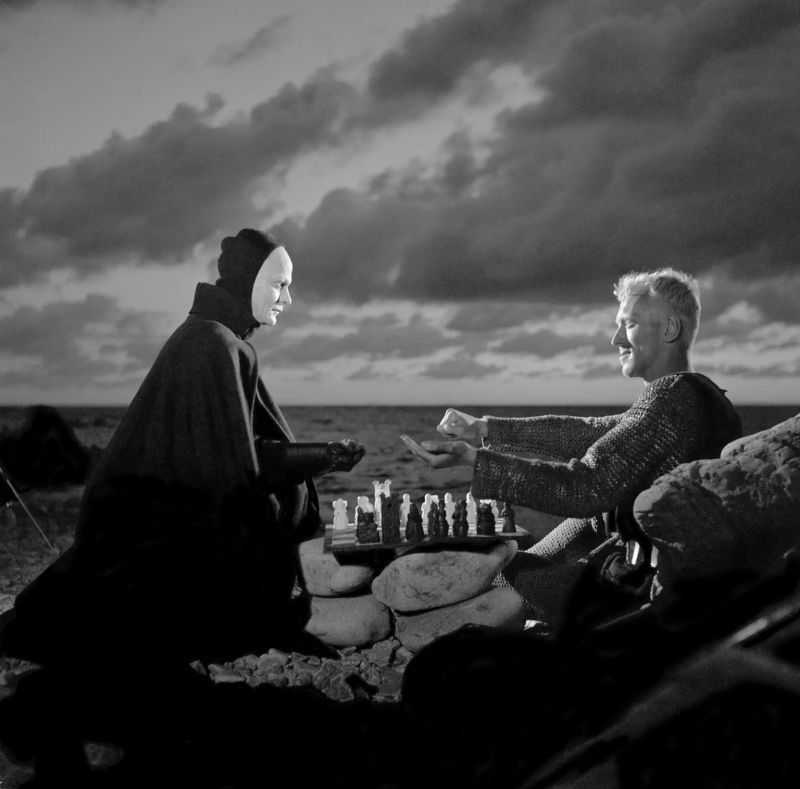
    While I was playing chess with death, fate was busy making a statement against the religious polarization plaguing India. My life was saved by two doctors, one a Hindu and the other a Muslim, as well as nurses and other medical professionals of diverse religious and ethnic backgrounds. Fuck your hate, we are one people.

    The Bergman reference comes from one of my doctors. After I was moved out of the ICU, he told me the full extent of what I had just gone through. “You played chess with death and won”, he said. I was taken aback and asked him if he had seen The Seventh Seal. He had never heard of the film.

    My recovery is going to take at least three to six months. Of course, this is a wake-up call and I need to change my lifestyle completely.

    While I do that, I plan to slowly start getting back to work today. What a time to be a freelancer!

    Originally shared on LinkedIn