There are trends afoot that could be the death rattle of football as we know it.
Sovereign wealth funds buying football clubs for sportswashing and profit. Multinational conglomerated sports team financial groups. The goddamn European Super League.
What was once the sport of the working classes – whose fans and best players emerged from the poorest sections of society – will soon be no more.
Football was about clubs, fans, and players. In its place, we will have Soccer™, which will be about franchises, customers, and assets.
Soccer™ will be a nice little social diversion for our plutocrat masters. They will spend whatever spare billions they find lying behind the couch on accruing top people for their teams as they compete with their fellow plutocrats for prestige. I expect that, much like in American sports, you’ll see the owner lift the trophy at the end of the season rather than the slaves players who worked for it.
But beyond my exaggerated sadness at the death of a sport that I once loved, I’m worried if this development is a portent for something I’ve feared for a long, long time.
Democracy Is Temporary, Plutocracy Is Permanent
I’m starting to wonder whether the natural order of human society is plutocracy, which eventually becomes an aristocracy anyway. Are democracy and its ideals of liberté, égalité, fraternité just unsustainable?
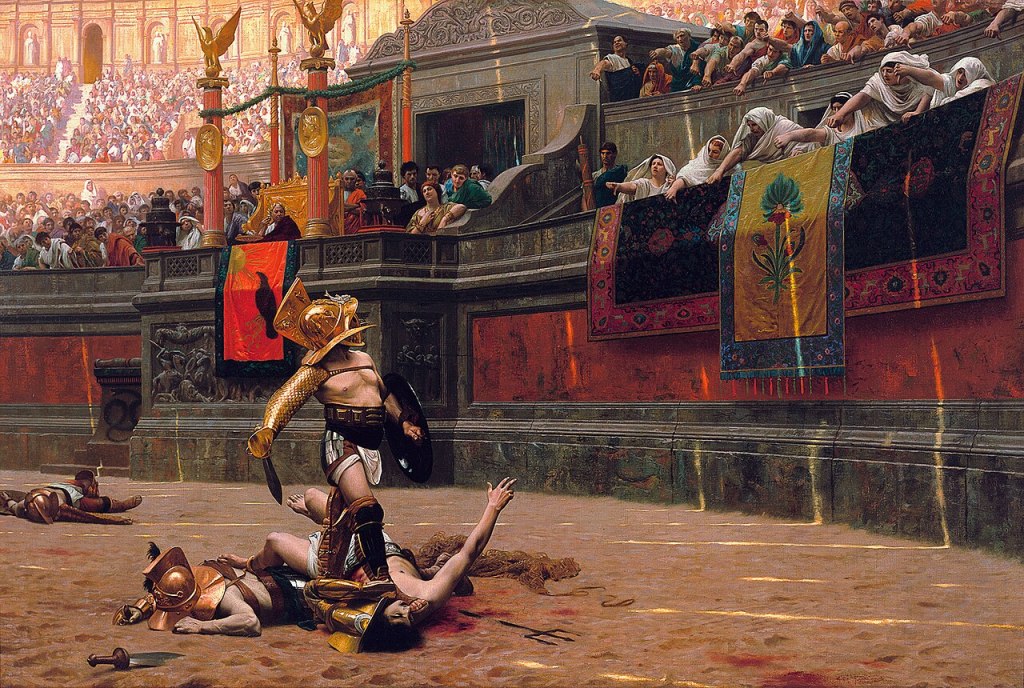
Rome was a republic for 482 years, from the deposing of Lucius Tarquinius Superbus in 509 BCE to Octavian changing his name to Augustus and taking the title Imperator Caesar divi filius in 27 BCE. While the words Imperator and Caesar have since morphed into synonyms for ‘king’ (‘emperor’ and ‘kaiser’/’czar’), they were originally selected because they were devoid of any notions of kingship or monarchy. They were seen as simple, almost bureaucratic titles.
Similarly, modern-day plutocrats don’t use the titles and insignia of monarchs and aristocrats from the 1700s, but rather adorn themselves with more mundane-sounding crowns. Thus, we do not have lords, dukes, marquees, earls, and barons but directors, board members, executive chairmen, and founder-CEOs.
From Augustus in 27 BCE to Romulus Augustus in 476 CE, the erstwhile republic was ruled by kings who didn’t call themselves kings. Then, from Odoacer in 476 to Victor Emmanuel III and Umberto II in 1946, the same region was ruled by kings again. 482 years of republicanism was followed by 503 years of kingship by a different name and 1,470 years of actual kingship once again.
The Wheel Turns Anew
Republics and democracies also rose and fell around the same time, between the 600s to 400s BCE, among the Mahajanapadas of Ancient India. And I haven’t even mentioned Athens, the democracy that, for generations, warmed the beds of salivating western historians; whose late-night fantasies about the “birth of western civilization” completely ignored the fact that their precious perfect Greek city-states were built on the foundations of slavery and misogyny.
In these examples, we see that democracies and republics lasted but the blink of an eye compared to the thousand-year Reiche of tyrants who preceded and succeeded them. These states and societies were massively influential, but the fact that we read so much about Greek history from that period sometimes blinds us to the fact that it lasted for maybe 200-odd years at the most.
We saw the re-emergence of republics and democracy around 200-odd years ago, with the creation of the United States. In the last century and a bit, we have seen royal houses go from being de-facto rulers of nation-states to figureheads who are more important to a country’s tourist industry than they are to its executive branch.
We thought these changes will be permanent, that the era of power resting in the hands of a small elite was over.
We were wrong.
The East India Company’s Board of Directors ruled over India for a century before the Crown stepped in. I wouldn’t be surprised if, a little while down the line in human history, titles like CEO, chairman, and board member morph into royal institutions.
Or maybe I’m just extrapolating way too much from distressing news about football.
Maybe I’m just an old idealist yelling against an idea whose time has come.
A dying breed of “legacy fans” in an age of Soccer™ consumers and customers.
 Harish Alagappa