Category: Capitalism

  • From Third Place to Good Place

    From Third Place to Good Place

    The Third Place is a concept popularized by American sociologist Ray Oldenburg in the late 1980s1. In simple terms, it’s the idea that as humans we spend most of our time and energy in two places – our homes (first place) and our work or school or university (second place). I know that some people might list work as their first place, but they’re a minority of either very lucky and contented people or very sad and hyper-motivated slaves.

    For us normies, meanwhile, the third place is somewhere we can gather and socialize in an informal context. An example that should hopefully resonate with most of you would be our neighbourhoods when we were kids. We would return home (first place) from our school (second place) and head out to our third place where we would either play sports or just hang around and get up to no good with our friends.

    The typical characteristics of a third place include that it’s a neutral ground that’s easily accessible, low profile, playful, and comfortable. This has a levelling effect on the interactions that happen at a third place. No one person has a claim over it, many people can access it on their own schedule, there’s no need for pretension, and it creates a relaxed and friendly environment where we feel free enough to be our true selves.
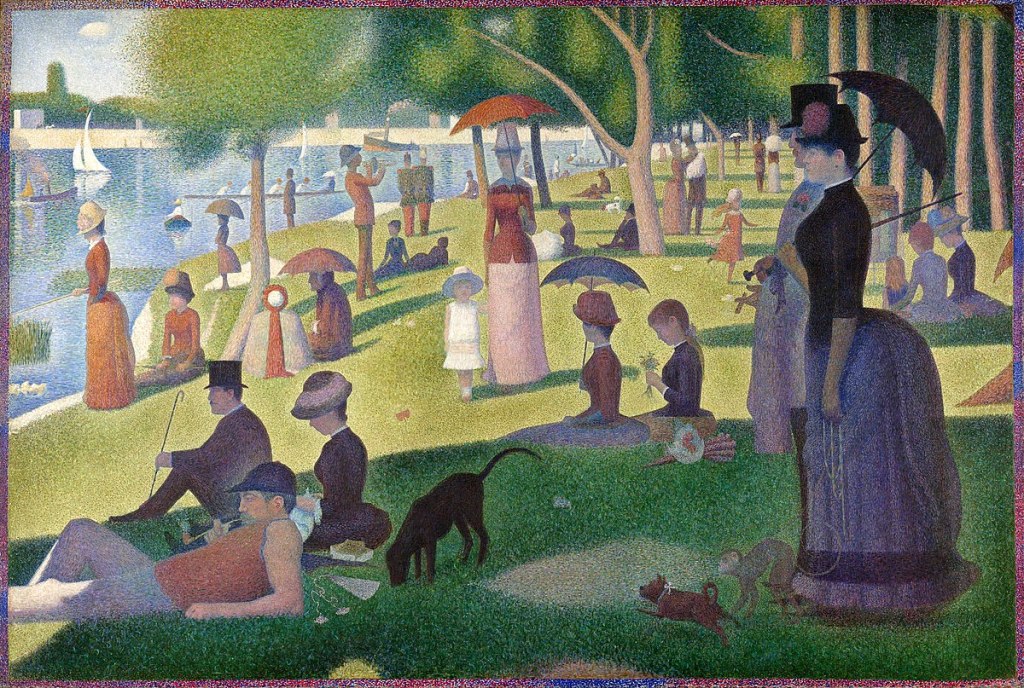
    Of course I'd use Le Grande Jatte. My third place that triggered this whole thought is a quiz club.

    The Rise and Fall of The Universal Third Place

    I was an internet optimist in my youth, way back in the halcyon days of Web 2.0 and early social media. The original purpose of social media was that it was a universal third place. Or at least that’s what it felt like. Then a motley crew of corporations, politicians, and previously fringe hate groups discovered that social media could be weaponized to create the late-capitalist fascist hellscape it is today.

    Since by then social media (and the internet) had already become our universal third place, we were now bound to it. It was like someone had poisoned the village well and we had no choice but to keep drinking from it. And thus, we too were poisoned. People who tend to be easily manipulated, such as sheltered young people and the elderly, found themselves fully ingesting the poison until it ran through every vein in their body. Others, and I count myself in this group, found themselves feeling constantly sickened by what they had no choice but to consume. Others were inspired to create their own poison and add that to the well too.

    So why don’t we just stop? Why can’t we just quit social media or the internet in general? Because Pandora’s Box cannot be closed again. It is still our third place. It is still the most easily accessible, relatively egalitarian, neutral ground where people from around the world can meet, interact, and socialize. And every human being needs a third place. Even the most introverted loner needs somewhere they can go, virtually or IRL, to have some level of social stimulation.

    Not a fan of most 2010s US comedies (like The Office), but The Good Place is an amazing show that's honestly very under-rated

    A New Hope: Go Touch Grass

    But the last year or so has shown me that while social media cannot be returned back into the fiery chasm from whence it came, it can be relegated to a lower rung of social spaces. I would like to propose that we turn social media from a universal third place into a universal fourth place. But I don’t need to propose it, because that’s what’s already happening.

    The simple retort, “Go touch grass” is evidence that our new Gen Z overlords – who I honestly relate to more than my own millennial coevals – are aware that social media is not a substitute for real social interaction.

    So, if social media or the internet or television has been your third place throughout the last decade or even your whole life, here is what I do actually propose. Find a new third place. Relegate the world of the internet to fourth and find a real-life place that you can go to and be yourself while interacting with real human beings and not the caricatures we pretend to be on these godforsaken platforms.

    The world is out there, not here on whatever screen you’re reading this on.

    My trip to Echoes of Earth last year was one of the best of my life. Have some exciting ideas of where to go this year, if things work out.

    1. To be honest, I don’t know anything about Ray Oldenburg’s life and work beyond my understanding of Third Places. If it turns out that he’s been completely discredited or was a racist abuser or something like that, I’m really sorry, I had no idea. ↩︎
  • Zen And The Art of Influencer Marketing

    Zen And The Art of Influencer Marketing

    The world of the 1990s and 2000s seemed to hold immense promise for humanity. The Cold War was over, and technology was bridging barriers, allowing people from opposite ends of the Earth to communicate with one another – offering hope for a more united and compassionate world.

    Well, good news! That promise is all but lost.

    The technology that was meant to unite people from opposite ends of the world has now been turned into a tool to divide people living in the same home. The Cold War was replaced by a Culture War. And perhaps the worst development of all, con artists, grifters, psychopaths, the vapidly vain and the downright inhumane are now heralded as heroes. Meanwhile, social media influencers brag about their material possessions and use that justify their awful behaviour, beliefs, and parasitic existence.

    Fake Plastic Men

    Inhumanity, a complete lack of empathy, naked greed, and bloodlust is supposedly an Alpha/Sigma/Omega/Epsilon mindset. Even though we have stories from thousands of years ago about people searching for the secret to eternal youth and how it made fools of them all, billionaires flaunt their multi-million-dollar anti-ageing procedures, while includes literally taking the blood of young people for themselves.

    The fact that these purveyors of ‘masculine’ influencer content are usually revealed to be frauds, con artists, grifters, literal human traffickers, or children of wealth trying to pass off their nepotism as “self-made” riches does nothing.

    Impressionable idiots are intoxicated by imposter influencers’ inane, immature, and impossible ideals, invariably immersing every iota of their individuality into an intricate, imaginary world of instant gratification and irrational beliefs.

    You have “alpha male” influencers who rail against gender affirming care for trans people on podcasts where they the hawk “nutritional supplement” pills to boost your testosterone. Displaying a staggering lack of self-awareness at best or malicious hypocrisy at worst, these middle-aged uncles take PEDs to maintain their physique, undergo surgeries to look younger and more masculine, and surgically enhance their hairline, jawline, and other body parts to then attack young trans folk for getting gender-affirming surgeries or even taking hormone blockers. THIS is what self-proclaimed alpha men or giga-chads turn out to be:

    We’ve Been Over This Before

    I never thought I would be the one to tell people to hark back to the past, but we’ve been over this before everyone. The ancient Sumerians, Akkadians, Phoenicians, Indians, Greeks, Palestinians, Judeans, Chinese, Japanese and every other culture have age-old stories about the transient nature of material wealth and how hoarding money, or gold or resources makes you pretty a terrible human being.

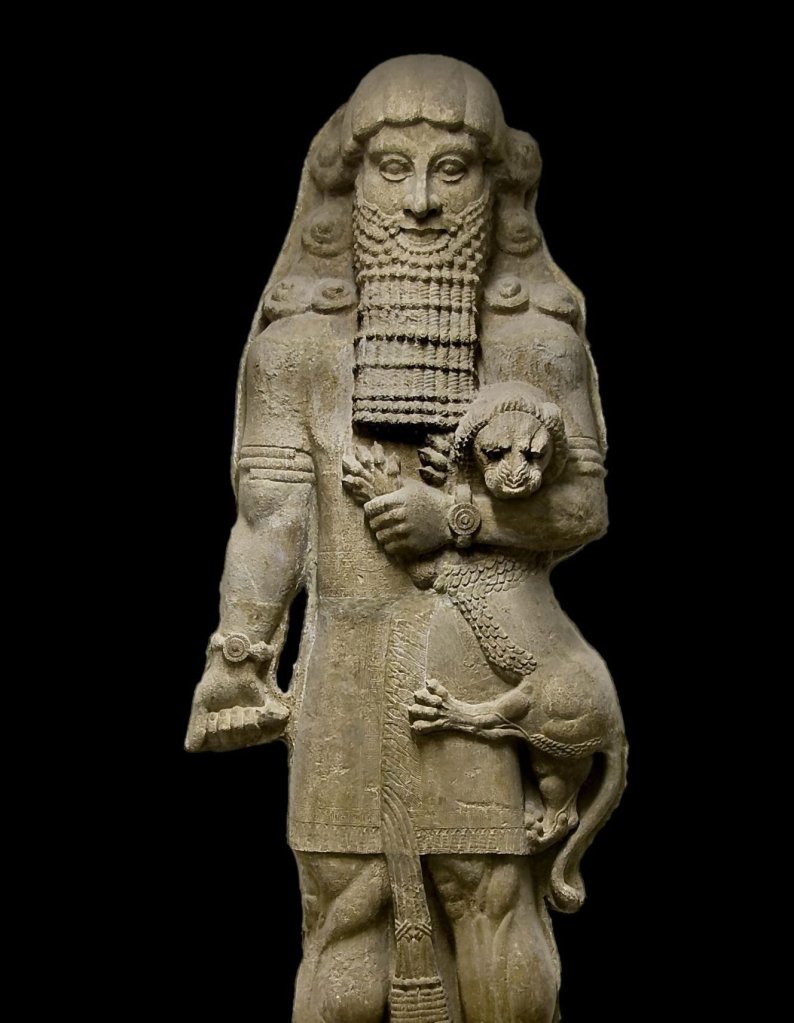
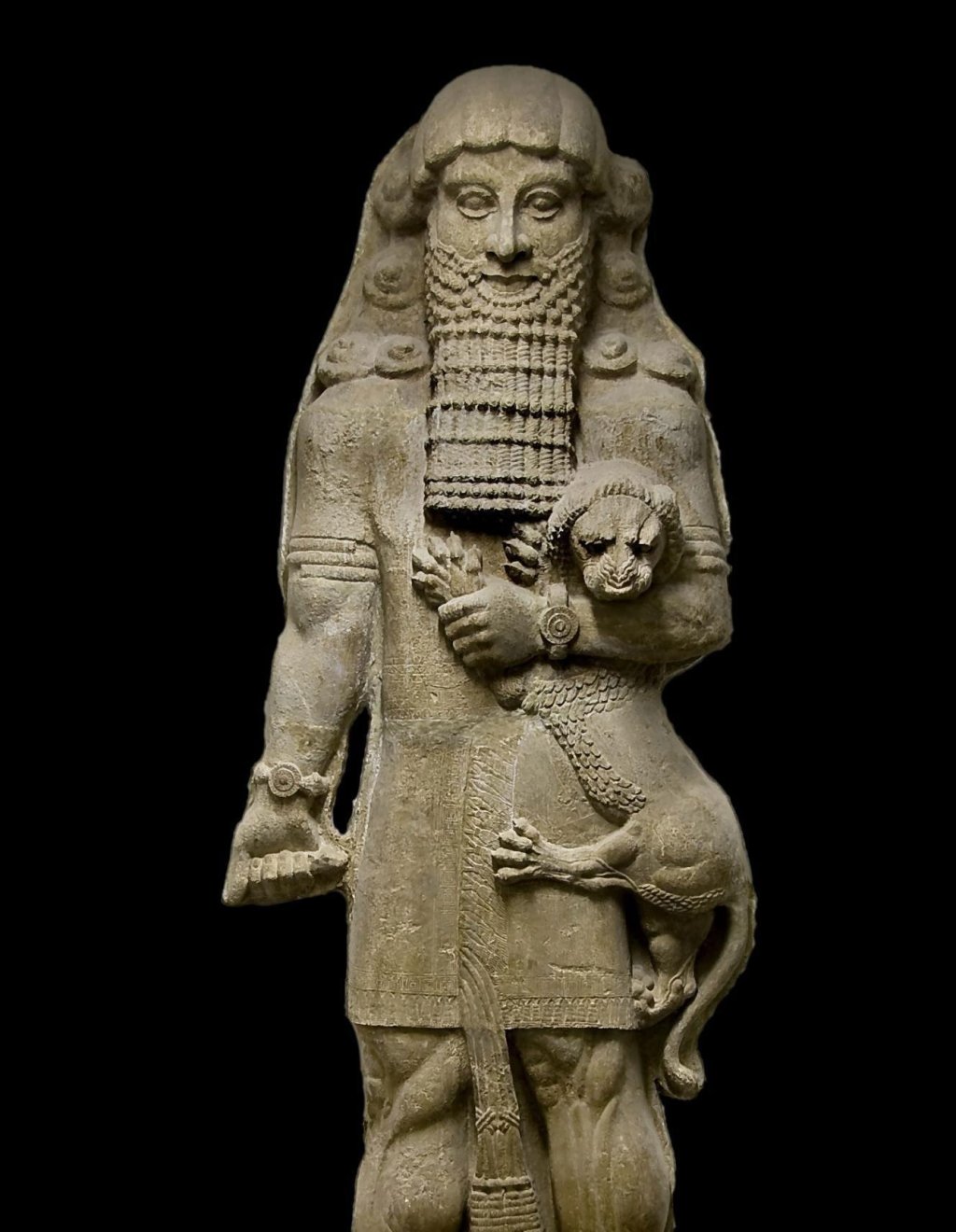
    The Epic of Gilgamesh starts off with the eponymous king abusing his wealth and power in much the same way modern billionaires do, before he is changing his ways and becoming a good guy. Later in the epic, Gilgamesh goes on a quest to become immortal and ultimately learns that it’s impossible, accepting that death comes for us all, even kings.

    Money and looks aren’t everything. Your beautiful bodies will be a stinking rotting corpse one day – there’s no escaping this. Your massive bank account, your lavish mansions and apartments, your Bugatti, none of them will buy you immortality. You may have amassed a cult following among young boys who are extremely familiar with computers but complete idiots when it comes to anything else – but they will die too, and their children will follow a different cult.

    The world was not built by men of iron, who treated everyone around them like dirt and trampled, lied, stole, cheated, raped, and pillaged their way to your idiotic idea of greatness. That’s a version of history created by the people who would simp for these horrible men to feel strong by association. These poor souls existed in the past and exist in the present, simp-ing for men who claim to be the big strong alpha man, but whose bluster hides an obviously and massively fragile ego. Both the leader and the simp are merely sad men trying to live up to impossible standards of masculinity that were thrust upon them without their knowledge. Whose fear of change and an egalitarian world leads them to dive deeper and deeper into justifying horrible behaviour.

    There are eight billion human beings on this planet. None of them is illegal and all of them deserve the same opportunities and resources for life and happiness that around 50,000 people on Earth are all hoarding for themselves while radicalizing impressionable idiots to be their simps – servants, foot-soldiers and grunts who will lick their masters’ boots and die for them even though they get nothing in return in some horrible twenty-first reboot of feudalism.

    It’s just frustrating to see history repeating itself, only worse.

  • From Football to Soccer: How the Death of the Beautiful Game Could Herald Something Much Worse

    From Football to Soccer: How the Death of the Beautiful Game Could Herald Something Much Worse

    There are trends afoot that could be the death rattle of football as we know it.

    Sovereign wealth funds buying football clubs for sportswashing and profit. Multinational conglomerated sports team financial groups. The goddamn European Super League.

    What was once the sport of the working classes – whose fans and best players emerged from the poorest sections of society – will soon be no more.

    Football was about clubs, fans, and players. In its place, we will have Soccer™, which will be about franchises, customers, and assets.

    Soccer™ will be a nice little social diversion for our plutocrat masters. They will spend whatever spare billions they find lying behind the couch on accruing top people for their teams as they compete with their fellow plutocrats for prestige. I expect that, much like in American sports, you’ll see the owner lift the trophy at the end of the season rather than the slaves players who worked for it.

    But beyond my exaggerated sadness at the death of a sport that I once loved, I’m worried if this development is a portent for something I’ve feared for a long, long time.

    Democracy Is Temporary, Plutocracy Is Permanent

    I’m starting to wonder whether the natural order of human society is plutocracy, which eventually becomes an aristocracy anyway. Are democracy and its ideals of liberté, égalité, fraternité just unsustainable?

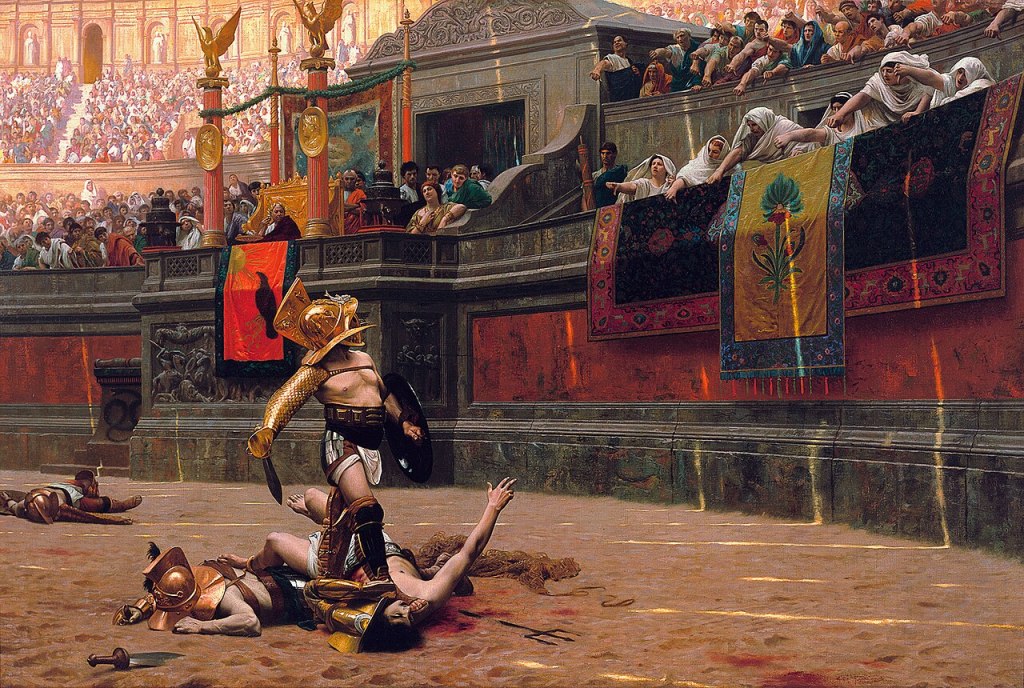
    Rome was a republic for 482 years, from the deposing of Lucius Tarquinius Superbus in 509 BCE to Octavian changing his name to Augustus and taking the title Imperator Caesar divi filius in 27 BCE. While the words Imperator and Caesar have since morphed into synonyms for ‘king’ (‘emperor’ and ‘kaiser’/’czar’), they were originally selected because they were devoid of any notions of kingship or monarchy. They were seen as simple, almost bureaucratic titles.

    Similarly, modern-day plutocrats don’t use the titles and insignia of monarchs and aristocrats from the 1700s, but rather adorn themselves with more mundane-sounding crowns. Thus, we do not have lords, dukes, marquees, earls, and barons but directors, board members, executive chairmen, and founder-CEOs.

    From Augustus in 27 BCE to Romulus Augustus in 476 CE, the erstwhile republic was ruled by kings who didn’t call themselves kings. Then, from Odoacer in 476 to Victor Emmanuel III and Umberto II in 1946, the same region was ruled by kings again. 482 years of republicanism was followed by 503 years of kingship by a different name and 1,470 years of actual kingship once again.

    The Wheel Turns Anew

    Republics and democracies also rose and fell around the same time, between the 600s to 400s BCE, among the Mahajanapadas of Ancient India. And I haven’t even mentioned Athens, the democracy that, for generations, warmed the beds of salivating western historians; whose late-night fantasies about the “birth of western civilization” completely ignored the fact that their precious perfect Greek city-states were built on the foundations of slavery and misogyny.

    In these examples, we see that democracies and republics lasted but the blink of an eye compared to the thousand-year Reiche of tyrants who preceded and succeeded them. These states and societies were massively influential, but the fact that we read so much about Greek history from that period sometimes blinds us to the fact that it lasted for maybe 200-odd years at the most.

    We saw the re-emergence of republics and democracy around 200-odd years ago, with the creation of the United States. In the last century and a bit, we have seen royal houses go from being de-facto rulers of nation-states to figureheads who are more important to a country’s tourist industry than they are to its executive branch.

    We thought these changes will be permanent, that the era of power resting in the hands of a small elite was over.

    We were wrong.

    The East India Company’s Board of Directors ruled over India for a century before the Crown stepped in. I wouldn’t be surprised if, a little while down the line in human history, titles like CEO, chairman, and board member morph into royal institutions.

    Or maybe I’m just extrapolating way too much from distressing news about football.

    Maybe I’m just an old idealist yelling against an idea whose time has come.

    A dying breed of “legacy fans” in an age of Soccer™ consumers and customers.

  • I Was Called Out in a Book by a “Fake” Author

    I Was Called Out in a Book by a “Fake” Author

    I’ve been reading The Listening Society, a book on the political ideology of metamodernism written under the nom de plume Hanzi Freinacht.

    I don’t know much about the real authors behind the book (and its sequel, Nordic Ideology, which I plan to read soon) but I find myself drawn to the ideas presented in it for two reasons.

    First, I’m generally fascinated by post-postmodern ideas and personally feel the way forward is some amalgamation of incredulity towards meta-narratives (Jean-Francois Lyotard’s definition of postmodernism) and something like David Foster Wallace’s New Sincerity.

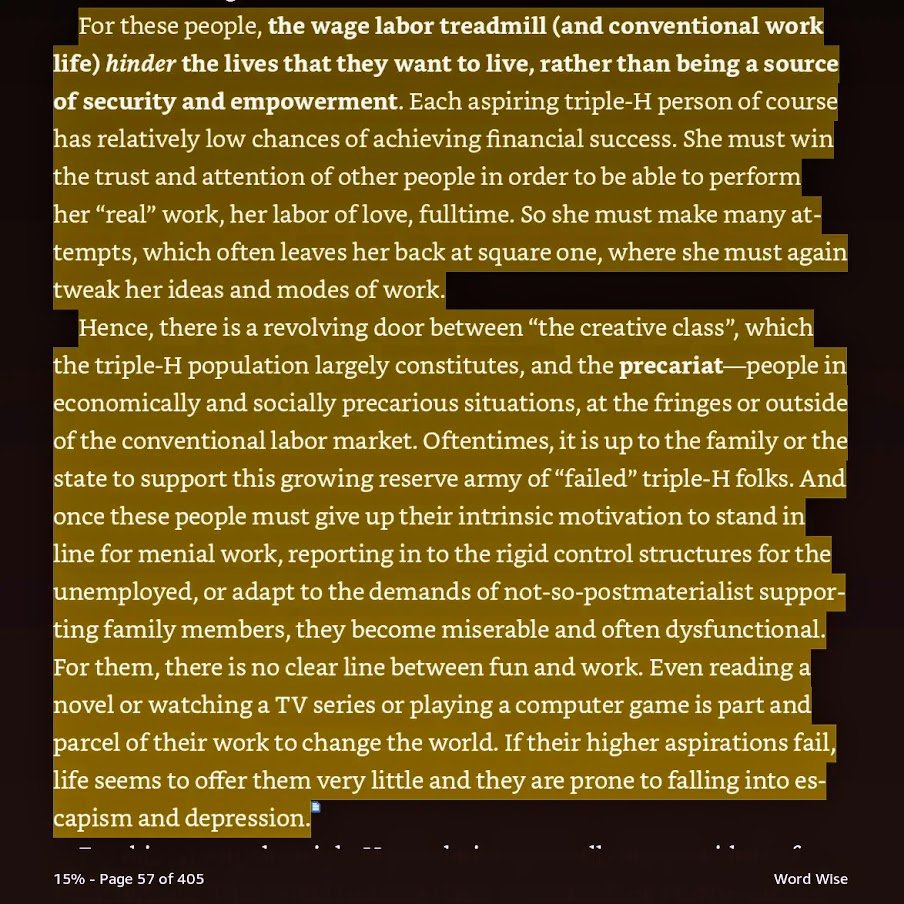
    And Reason B. I’ve never seen a book describe me so well as these two paragraphs.

    BTW, the “triple H” people described here are “Hackers, Hipsters, and Hippies” and have nothing to do (afaik) with WWE’s Hunter Hearst Helmsley, a.k.a The Game.